Happy Halloween.
You don’t need a costume, your face is scary enough as is.
٩(•̮̮̃•̃)۶ ٩(-̮̮̃-̃)۶ ٩(●̮̮̃•̃)۶ ٩(͡๏̯͡๏)۶ ٩(-̮̮̃•̃)۶
Happy Halloween.
You don’t need a costume, your face is scary enough as is.
٩(•̮̮̃•̃)۶ ٩(-̮̮̃-̃)۶ ٩(●̮̮̃•̃)۶ ٩(͡๏̯͡๏)۶ ٩(-̮̮̃•̃)۶
Wife: Can you help me in garden??
Husband: What do you think, I'm Gardener.. ??
Wife: Can you fix door handle??
Husband: What do you think, I'm a Carpenter. .??
In the Evening when husband came from the work, He saw everything has been fixed..!!
He asked: Who fixed this..??
Wife: "Our Neighbour but he gave me 2 options..! !
Either I should give him burger or a kiss..!!
Husband: I'm sure you must have given a burger..!!
Wife: What do You think, I'm Mc'Donald' s..?p
A guy knocked on my door today asking for a donation for the local primary school’s pool.
I went away and came back with a cup of water….. Is that wrong?
Avoid arguments.
An argument is a fire in the house.
Extinguish it with a simple 'I'm sorry' even if it is not your fault.
When you fight back, you are only adding wood to the fire.
Below is a very good story which provides a beautiful example of tolerance and patience which is essential for any successful marriage.
' A man and woman had been married for more than 50 years. They shared everything. and kept no secrets from each other except that the little old woman had a shoebox in the closet that she had cautioned her husband never to open or ask her about. For all of these years, he never thought about the shoebox, but one day the little old woman got very sick and the doctor said she would not recover. In trying to sort out their affairs, the little old man took down the shoebox and took it to his wife's bedside. She agreed that it was time that he should know what was in the shoebox.When he opened it, he found two hand made dolls and a bag of money totalling $20,000. He asked her about the contents. "When we were to be married," she said, "my grandmother told me the secret of a happy marriage was to never argue. She told me that if I ever got angry with you, I should just keep quiet and make a doll."The little old man was so moved; he had to fight back tears. Only two precious dolls were in the shoebox. She had only been angry with him two times in all those years of living and loving. He almost burst with happiness "Honey," he said, "that explains the doll, but what about all of this money? Where did it come from?" "Oh," the little old woman said, "That's the money I made from selling the dolls." '

''Hi, thanks for coming,'' the medical assistant says, greeting a mother with her 5-year-old son. ''Are you here for your child or yourself?''
The boy, the mother replies. He has diarrhea.
''Oh no, sorry to hear that,'' she says, looking down at the boy.
The assistant asks the mother about other symptoms, including fever (''slight'') and abdominal pain (''He hasn't been complaining'').
She turns again to the boy. ''Has your tummy been hurting?'' Yes, he replies.
After a few more questions, the assistant declares herself ''not that concerned at this point.'' She schedules an appointment with a doctor in a couple of days. The mother leads her son from the room, holding his hand. But he keeps looking back at the assistant, fascinated, as if reluctant to leave.
Maybe that is because the assistant is the disembodied likeness of a woman's face on a computer screen -- a no-frills avatar. Her words of sympathy are jerky, flat and mechanical. But she has the right stuff -- the ability to understand speech, recognize pediatric conditions and reason according to simple rules -- to make an initial diagnosis of a childhood ailment and its seriousness. And to win the trust of a little boy.
''Our young children and grandchildren will think it is completely natural to talk to machines that look at them and understand them,'' said Eric Horvitz, a computer scientist at Microsoft's research laboratory who led the medical avatar project, one of several intended to show how people and computers may communicate before long.
For decades, computer scientists have been pursuing artificial intelligence -- the use of computers to simulate human thinking. But in recent years, rapid progress has been made in machines that can listen, speak, see, reason and learn, in their way. The prospect, according to scientists and economists, is not only that artificial intelligence will transform the way humans and machines communicate and collaborate, but will also eliminate millions of jobs, create many others and change the nature of work and daily routines.
The artificial intelligence technology that has moved furthest into the mainstream is computer understanding of what humans are saying. People increasingly talk to their cellphones to find things, instead of typing. Both Google's and Microsoft's search services now respond to voice commands. More drivers are asking their cars to do things like find directions or play music.
The number of American doctors using speech software to record and transcribe accounts of patient visits and treatments has more than tripled in the past three years to 150,000. The progress is striking. A few years ago, supraspinatus (a rotator cuff muscle) got translated as ''fish banana.'' Today, the software transcribes all kinds of medical terminology letter perfect, doctors say. It has more trouble with other words and grammar, requiring wording changes in about one of every four sentences, doctors say.
''It's unbelievably better than it was five years ago,'' said Dr. Michael A. Lee, a pediatrician in Norwood, Mass., who now routinely uses transcription software. ''But it struggles with 'she' and 'he,' for some reason. When I say 'she,' it writes 'he.' The technology is sexist. It likes to write 'he.' ''
Meanwhile, translation software being tested by the Defense Advanced Research Projects Agency is fast enough to keep up with some simple conversations. With some troops in Iraq, English is translated to Arabic and Arabic to English. But there is still a long way to go. When a soldier asked a civilian, ''What are you transporting in your truck?'' the Arabic reply was that the truck was ''carrying tomatoes.'' But the English translation became ''pregnant tomatoes.'' The speech software understood ''carrying,'' but not the context.
Yet if far from perfect, speech recognition software is good enough to be useful in more ways all the time. Take call centers. Today, voice software enables many calls to be automated entirely. And more advanced systems can understand even a perplexed, rambling customer with a misbehaving product well enough to route the caller to someone trained in that product, saving time and frustration for the customer. They can detect anger in a caller's voice and respond accordingly -- usually by routing the call to a manager.
Siri, put simply, listens to voice commands, searches the Web and online services, and delivers answers.
Siri is an evolving artificial intelligence application for things like making restaurant reservations and answering simple questions. And it has been impressing technologists long before Apple bought it last year.
Nick Bilton/The New York Times
“I’ve finally cracked it!” Steven P. Jobs, co-founder of Apple, told his biographer, Walter Isaacson.
Although Mr. Jobs was referring to Apple’s plans to build a full-fledged television, he was not actually referring to the TV set, which is how the comment has been widely interpreted. Instead, it is becoming clear that Mr. Jobs was talking about Siri, Apple’s new artificial intelligent software on the iPhone 4S.
Apple engineers and designers, spurred by Mr. Jobs, have been struggling for years to find a new interface for the television. One of the biggest hurdles, according to people with knowledge of the project, has been replacing the television set’s annoying best friend: the awkward and confusing remote control. Apple would give people a way to choose the content on their television that is as easy as choosing the content on their iPod, iPhone or iPad.
Alternative remote ideas floated by Apple included a wireless keyboard and mouse, or using an iPod, iPhone or iPad as a remote. None of these concepts worked. But there was one “I finally cracked it” moment, when Apple realized you could just talk to your television.
Enter Siri.
It’s the stuff of science fiction. You sit on your couch and rather than fumble with several remotes or use hand gestures, you simply talk: “Put on the last episode of Gossip Girl.” “Play the local news headlines.” “Play some Coldplay music videos.” Siri does the rest.
Of course this experience goes beyond just playing TV shows or the local news. As the line between television programming and Web content continues to erode, a Siri-powered television would become more necessary. You aren’t going to want to flip through file folders or baskets of content, checking off what you want. Telling Siri to “play videos of cute cats falling asleep” would return an endless YouTube stream of adorable napping fur balls.
The television project has been in the works for sometime. I first heard about Apple’s television plans over a year ago.
At the time, an individual who has knowledge of Apple’s prototype supply chains overseas told me they had seen some “large parts floating around” that belonged to Apple. This person believed that it “looked like the parts could be part of a large Apple television.”
I immediately began snooping around, asking Apple employees and people close to the company if a full fledged Apple Television was in the works. Several people, all speaking on condition of anonymity for obvious reasons, told me that nothing was actively being built, but — and this was a big but — I was told repeatedly that Apple would eventually make a television. “Absolutely, it is a guaranteed product for Apple,” I was told by one individual. “Steve thinks the industry is totally broken.”
Mr. Jobs reiterated this sentiment in his biography, explaining to Mr. Isaacson that an Apple television “will have the simplest user interface you could imagine.”
So what could be simpler than barking commands to your television?
On my quest to learn more about the Apple television project, I learned that executives at Apple knew as far back as 2007 that the company would eventually make a dedicated TV. This realization came shortly after the company released the Apple TV, a box that connects to any manufacturer’s television to stream iTunes content. Consumers did not flock to the Apple TV, and rather than abandon the project, Apple began calling it a “hobby.”
But that hobby could soon reap astounding financial returns. A recent report issued by Barclays predicted that if Apple made a television set, excluding content deals, Apple could generate an additional $19 billion in revenue a year. This number would not be a stretch either; Barclays said in the report that Apple would only need to capture 5 percent of television buyers to reach this goal.
So where’s the Apple television? The company still has quite a bit of work to do on the project. Apple has perfected ultra-thin, portable devices — the Macbook Air, iPhone and iPods, for example — but it has not applied this innovation to gadgets that hang on a wall, yet.
The company also needs to wait until the cost of large displays falls. Although some 42-inch LCD televisions from mainstream consumer electronics companies can cost as little as $500, the Apple television would include computer electronics and other technology that may make the price uncompetitive. And as my colleague Nick Wingfield recently noted, Apple is no longer the high-priced producer in any category it has entered. The company is now close enough that it could announce the product by late 2012, releasing it to consumers by 2013.
It is coming though. It’s not a matter of if, it’s a matter of when.
What does Steve Job's meant by " I FINALLY CRACKED IT " in his autobiography....Did he mean iTV ....find out ............MK
Ingenious researchers at University of Japan have created a new invisibility cloak using Mirage effect (yes the natural effect commonly seen by a naked eye in the desert or on hot roads during the summer). This is really unforeseen as previous attempts at making things invisible have always been focusing on projections, coatings, paints, cameras, displays and meta-materials.
The researchers were successful in demonstrating the cloak in a small laboratory experiment (video embedded below).
The technology comes from 2003, but it's developers say the Harry Potter-like invisibility cloak is just the beginning. The team, led by Dr. Susumu Tachi, from Keio University, is now adapting their findings to help pilots, drivers, doctors and others. Retro-reflective projection technology uses a computer, a video camera and projector to shine background images onto the front of a subject wearing specialised clothing, creating the illusion of invisibility. What makes the technology unique is a fabric made of glass beads only 50 microns wide, which can reflect light directly back at the source, much like the screen in a cinema. Viewed from near the light source, the projection is bright even in broad daylight, and researchers say the material can be applied to almost anything. In the short term, the team sees usage in car interiors, airplanes and helicopters. They say blind spots could be eliminated and accidents and hard landings avoided by making walls seemingly transparent. The eventual goal though is to create an "augmented reality" that allows anyone to easily see information on real world objects. [Dr. Susumu Tachi, Keio University]: "Looking to the future, instead of glasses, people could wear this and it would act as a navigation system. It could also tell you who someone is, if you meet them around town." In the few years since the technology's invention, the price of the material, as well as that of computing, has come down, opening the door for smaller yet more powerful applications. Whether used to increase safety or to create a whole new form of computer-human interaction, the world is likely to see, or possibly not see, more of this technology in the future.
A little point on ignorance. Every day I seem to fight against ignorance. Most of the time it centres around the theme of finance and money, but over the past week it’s been more around computers / IT / social media as a marketing tool. It turns out that people are lazy. I guess I used to be part of that majority – that is until I discovered a magical thing called Google (and YouTube). Don’t know how to use bookmarks in your web browser? Google “how to use bookmarks in a web browser” or look up the same thing on YouTube – goodness me – step by step instructions on how to do it? You’ve got to be kidding me! Hold on, you mean I can do that for any topic? You mean there are other people in the world who’ve had this problem in the past?! (note the sarcasm please).Tomorrow will be a half-day for work – probably the morning but it will depend on a few factors. I’m so psyched as I’ll be turning XXXX with nothing solid planned aside from being open minded.
The plus symbol is made with 2 minus symbols so all NEGATIVE things can be shaped as positives if you put your trust in God." as Usual....MK 
"We have two ears and one mouth so that we can listen twice as much as we speak." - Epictetus 
EVEREY INDIAN MUST KNOW THIS FACTBelow photo is from a Swiss Magazine Schweizer Illustriertein (November 1991) – it shows the top holders of Swiss bank accounts at the time.
Rajiv appears in the august company of other dictators like Saddam Hussein, Suharto of Indonesia, etc.
The text below Rajiv’s photo reads: Rajiv Gandhi, Indian, Holds 2.5 billion Swiss Francs (eq. to 13,200 Crores in 1991).
Till date, the Congress party has never refuted / spoken about these allegations.
These are our great leaders on whose birth & death anniversaries the government uses the tax payer’s money to lavishly advertise their so-called ‘achievements’ in all national newspapers ! and name Airports, Highways etc built by our money on their names !!

EVEREY INDIAN MUST KNOW THIS FACTBelow photo is from a Swiss Magazine Schweizer Illustriertein (November 1991) – it shows the top holders of Swiss bank accounts at the time.
Rajiv appears in the august company of other dictators like Saddam Hussein, Suharto of Indonesia, etc.
The text below Rajiv’s photo reads: Rajiv Gandhi, Indian, Holds 2.5 billion Swiss Francs (eq. to 13,200 Crores in 1991).
Till date, the Congress party has never refuted / spoken about these allegations.
These are our great leaders on whose birth & death anniversaries the government uses the tax payer’s money to lavishly advertise their so-called ‘achievements’ in all national newspapers ! and name Airports, Highways etc built by our money on their names !!
BY FC EXPERT BLOGGER RICH BROOKS Having never taken a business class in college I find that I read and listen to a lot of business books to round out my education. The books usually aren't "How to Manage Your Cash Flow" but rather get me to rethink the way I run my business, which--despite no business classes or diploma--continues to be in business 13 plus years after I started it. In that time, here are 13 of the books that had the biggest impact on how I run my business(in no particular order): The beauty of this list is that I get to leave off a whole bunch of mind-blowing business books that you can't believe didn't make the list. I'd love to hear what I forgot for my next trip to Amazon, Audible, or my local library. Please feel free to start all suggestions with "I can't believe you left off..." 13 Business Books That Will Blow Your Mind
 Drive: The Surprising Truth About What Motivates Us by Daniel Pink: If you supervise anyone in your business, this book is a must read. It shows that what science knows about motivation, business isn't putting into practice. In fact, many of the incentives we create can actually de-motivate our employees. If you create an incentive program that provides financial rewards for work that your employees already enjoy, expect the results to be negative. You've just destroyed their internal motivation. Also important (and well documented within the book) is that internally motivated people succeed more often than externally motivated people; they last longer and do better work. Think about that when you're hiring your next employee.
 Trust Agents: Using the Web to Build Influence, Improve Reputation, and Earn Trust by Chris Brogan & Julien Smith: There are plenty of social media books that are out-of-date before they even hit Amazon or your local book store, but Brogan & Smith avoid this trap by talking more about strategy than specific platforms...something that will continue to provide value as long as people are doing business with people, no matter what the medium is.
 Permission Marketing : Turning Strangers Into Friends And Friends Into Customers by Seth Godin: This book literally changed my life and the way I do business. I didn't really know who Seth Godin was (although I recognized his bald head) when I downloaded this book off Audible, but I still remember when I fired it up for the first time on my iPod as I mowed the lawn that day. My neighbors must have thought I was crazy with the number of times I slapped my forehead in a moment that was a mash up of "of course," "how obvious", and "why didn't I realize that before." It's driven the way we market our own company and how we help other companies reach their audience.
 Freakonomics and SuperFreakonomicsby Steven D. Levitt & Stephen J. Dubner:Okay, I'm cheating: these are two books. However, if you've read them, they're both basically the same: they pull in different examples to show how people respond to incentives, but not always in the way we expect. These books work well with anything written by Malcolm Gladwell, Daniel Pink or Chip & Dan Heath. However, as I read them, I was constantly making notes on what our company was offering to prospects and even current clients in the way of incentives (planned or otherwise), and whether they were having the intended results. I think the books are eye-opening in terms of forcing us to take a closer look at how our offerings affect our customers, vendors and employees.
 Crush It! Why NOW is the Time to Cash In on Your Passion by Gary Vaynerchuk:Vaynerchuk is a force of nature, and that comes through in this quick read book. Part inspirational, part autobiographical, you can see how in this new era there's nothing holding you back from success except hard work and leveraging the tools that are at our disposal. Vaynerchuk shows you how to brand yourself no matter where your passion lies: how to create great content, how to distribute that content, and how to succeed. If you're still struggling with how all this social media "stuff" can help you out, this is the book to pick up.
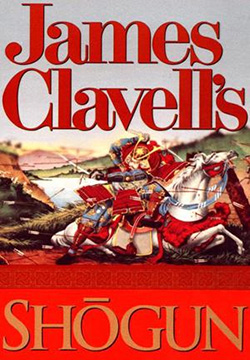 Shogun by James Claville: I read once that in a survey of CEO's favorite business books only one book was mentioned twice: this one. It's a great read and it does show how leaders can influence/manipulate people to achieve goals.
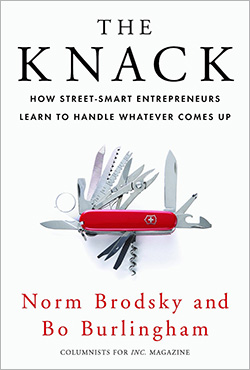 The Knack: How Street-Smart Entrepreneurs Learn to Handle Whatever Comes Up by Norm Brodsky and Bo Burlingham: I wanted to have at least one book that was dedicated to small business and the entrepreneurial spirit. This last book was in a close race with Small Giants: Companies That Choose to Be Great Instead of Big by Bo Burlingham. However, The Knack has some priceless stories and advice that can't be overlooked. It's a collection of advice and anecdotes on how to start, grow and possibly sell a business by someone who's been there (and a co-author who helps write his columns.) A lot of these stories have been told before in Brodsky's column for Inc. magazine, but if you haven't read them all, this book does a great job of curating them and putting them together in an order that would help any small business owner grow their business.
BY FC EXPERT BLOGGER RICH BROOKS
Having never taken a business class in college I find that I read and listen to a lot of business books to round out my education. The books usually aren't "How to Manage Your Cash Flow" but rather get me to rethink the way I run my business, which--despite no business classes or diploma--continues to be in business 13 plus years after I started it.
In that time, here are 13 of the books that had the biggest impact on how I run my business(in no particular order):
Drive: The Surprising Truth About What Motivates Us by Daniel Pink: If you supervise anyone in your business, this book is a must read. It shows that what science knows about motivation, business isn't putting into practice. In fact, many of the incentives we create can actually de-motivate our employees. If you create an incentive program that provides financial rewards for work that your employees already enjoy, expect the results to be negative. You've just destroyed their internal motivation. Also important (and well documented within the book) is that internally motivated people succeed more often than externally motivated people; they last longer and do better work. Think about that when you're hiring your next employee.Trust Agents: Using the Web to Build Influence, Improve Reputation, and Earn Trust by Chris Brogan & Julien Smith: There are plenty of social media books that are out-of-date before they even hit Amazon or your local book store, but Brogan & Smith avoid this trap by talking more about strategy than specific platforms...something that will continue to provide value as long as people are doing business with people, no matter what the medium is.Permission Marketing : Turning Strangers Into Friends And Friends Into Customers by Seth Godin: This book literally changed my life and the way I do business. I didn't really know who Seth Godin was (although I recognized his bald head) when I downloaded this book off Audible, but I still remember when I fired it up for the first time on my iPod as I mowed the lawn that day. My neighbors must have thought I was crazy with the number of times I slapped my forehead in a moment that was a mash up of "of course," "how obvious", and "why didn't I realize that before." It's driven the way we market our own company and how we help other companies reach their audience.Freakonomics and SuperFreakonomicsby Steven D. Levitt & Stephen J. Dubner:Okay, I'm cheating: these are two books. However, if you've read them, they're both basically the same: they pull in different examples to show how people respond to incentives, but not always in the way we expect. These books work well with anything written by Malcolm Gladwell, Daniel Pink or Chip & Dan Heath. However, as I read them, I was constantly making notes on what our company was offering to prospects and even current clients in the way of incentives (planned or otherwise), and whether they were having the intended results. I think the books are eye-opening in terms of forcing us to take a closer look at how our offerings affect our customers, vendors and employees.Crush It! Why NOW is the Time to Cash In on Your Passion by Gary Vaynerchuk:Vaynerchuk is a force of nature, and that comes through in this quick read book. Part inspirational, part autobiographical, you can see how in this new era there's nothing holding you back from success except hard work and leveraging the tools that are at our disposal. Vaynerchuk shows you how to brand yourself no matter where your passion lies: how to create great content, how to distribute that content, and how to succeed. If you're still struggling with how all this social media "stuff" can help you out, this is the book to pick up.Shogun by James Claville: I read once that in a survey of CEO's favorite business books only one book was mentioned twice: this one. It's a great read and it does show how leaders can influence/manipulate people to achieve goals.The Knack: How Street-Smart Entrepreneurs Learn to Handle Whatever Comes Up by Norm Brodsky and Bo Burlingham: I wanted to have at least one book that was dedicated to small business and the entrepreneurial spirit. This last book was in a close race with Small Giants: Companies That Choose to Be Great Instead of Big by Bo Burlingham. However, The Knack has some priceless stories and advice that can't be overlooked. It's a collection of advice and anecdotes on how to start, grow and possibly sell a business by someone who's been there (and a co-author who helps write his columns.) A lot of these stories have been told before in Brodsky's column for Inc. magazine, but if you haven't read them all, this book does a great job of curating them and putting them together in an order that would help any small business owner grow their business.The beauty of this list is that I get to leave off a whole bunch of mind-blowing business books that you can't believe didn't make the list. I'd love to hear what I forgot for my next trip to Amazon, Audible, or my local library. Please feel free to start all suggestions with "I can't believe you left off..."

Hey all
I didnt know whom to share this with since nobody of mine is there to cry with, so i posted this here......Tears rolling down....... I miss my daughters a lot and i hope one day GOD will give some brains to women so that the kids do not have to miss thier fathers and the fathers their daughters just because the mothers were not able to live amicably with the fathers...............I love them and may God bless them with all the good things in this life....MK from the heart
MIGHT BE WHEN MY DAUGHTERS GROW UP AND READ THIS IF THE SOCIAL MEDIA IS STILL AROUND THEY MIGHT ATLEAST FEEL WHAT I WAS GOIGN THROUGH AND DO NOT DO THE SAME WITH THEIR CHILDREN WHAT THEIR MOTHER IS DOIGN WITH THEM::::::MAY ALLAH GIVE THEM THE WISDOM::::::::::MK
Good Lost Daughter
Anybody here anyone who sees i am crying
is the world so fucking wrong scaping in a song
i am lying
i want you to be with me
i want you to be next to me
before i am dying
Hold your head here i am
chasing the stars in the song
bringing my lost daughter back
Dont want her to be sad
i need to shelter her right now
bringing my lost daughter back
i'm dying !!!!!!!!!!!!!!!!!!!!!!!

Hey all
I didnt know whom to share this with since nobody of mine is there to cry with, so i posted this here......Tears rolling down....... I miss my daughters a lot and i hope one day GOD will give some brains to women so that the kids do not have to miss thier fathers and the fathers their daughters just because the mothers were not able to live amicably with the fathers...............I love them and may God bless them with all the good things in this life....MK from the heart
MIGHT BE WHEN MY DAUGHTERS GROW UP AND READ THIS IF THE SOCIAL MEDIA IS STILL AROUND THEY MIGHT ATLEAST FEEL WHAT I WAS GOIGN THROUGH AND DO NOT DO THE SAME WITH THEIR CHILDREN WHAT THEIR MOTHER IS DOIGN WITH THEM::::::MAY ALLAH GIVE THEM THE WISDOM::::::::::MK
Good Lost Daughter
Anybody here anyone who sees i am crying
is the world so fucking wrong scaping in a song
i am lying
i want you to be with me
i want you to be next to me
before i am dying
Hold your head here i am
chasing the stars in the song
bringing my lost daughter back
Dont want her to be sad
i need to shelter her right now
bringing my lost daughter back
i'm dying !!!!!!!!!!!!!!!!!!!!!!!
ToGether
"We" .. 'Will'.. Discover:
"OneNess In Unity" ....as Usual...MK

CMU Researchers Turn Any Surface Into A Touchscreen
Soon you, too, will be able to talk to the hand. A new interface created jointly by Microsoft and the Carnegie Mellon Human Computer Interaction Institute allows for interfaces to be displayed on any surface, including notebooks, body parts, and tables. The UI is completely multitouch and the “shoulder-worn” system will locate the surface you’re working on in 3D space, ensuring the UI is always accessible. It uses a picoprojector and a 3D scanner similar to the Kinect.
The product is called OmniTouch and it supports “clicking” with a finger on any surface as well as controls that sense finger position while hovering a hand over a surface. Unlike the Microsoft Surface, the project needs no special, bulky hardware – unless you a consider a little parrot-like Kinect sensor on your shoulder bulky. While obviously obtrusive, the project is a proof-of-concept right now and could be made smaller in the future.
So far the researchers have tested drawing and “crosshair” interaction with the system and it has worked well on arms, hands, notebooks, and tables. We’re obviously looking at a research project here so don’t expect shoulder mounted Xboxes any time soon, but by gum if this isn’t the coolest thing I’ve seen today.

Apple’s marketing has changed the career trajectories of musicians around the world. A 30-second music clip in an Apple commercial often heralds instant fame and heaps of MP3 downloads for artists.
How did Steve Jobs and Apple do this? Apple has managed to tie its products into our personal culture. The company designed its products with our songs, films and ideas in mind. Apple’s soundtrack is our soundtrack.
After a decade of using music to promote its gadgets, Apple has more than achieved its goal of creating a culture via the following songs. So much so, in fact, that even Apple accessories (like the iPad Smart Cover) have become cultural touchstones complete with their own soundtrack.
1. iPod 1G: The Propellerheads — “Take California”
In October 2001, Apple debuted its first commercial for a portable MP3 player called the iPod. The ad predated the dark silhouettes featured in their later campaigns. The Propellerheads did not latch onto Apple’s increasing popularity, however, as they never released an album after the ad aired.
Australian rock group Jet was one of the first bands to enormously benefit from Apple ad placement. The band, whose hit single “Are You Gonna Be My Girl?” was prominently featured in a 2003 iPod 3G commercial, went on to have its music featured in numerous other ads, movies and video games — including Guitar Hero and Rock Band.
Jet’s success with the iPod campaign spawned a string of ads with catchy rock songs. Caesars’ “Jerk It Out” earned the band critical acclaim after being featured in an iPod Shuffle spot a couple years later.
If the iPod wasn’t already considered a cultural necessity, U2’s Apple commercial spot solidified the product’s reputation. One of the world’s biggest bands allowed its lead single to become the anthem for an Apple nation.
While Feist wasn’t entirely unknown when “1, 2, 3, 4” exploded, she exemplifies Apple’s ability to launch a career. When this commercial aired, the former Broken Social Scene member had one solo album to her name, with her second freshly in stores. Apple’s use of her single for promoting the iPod Nano transformed her from a respected indie rocker into an internationally-known, Grammy-nominated star.
It wasn’t until the iPod touch came out that functionality truly matched design. CSS’s single “Music is my Hot Hot Sex” may have been one of Apple’s most fitting song placements; it alluded to the product’s versatility as more than just an MP3 player. As for CSS, the ad placement put the Brazilian dance-pop act on the map in the U.S.
“The ad for the iPod touch kind of turned our song into a single,” explains Luiza Sa of CSS. “The whole thing felt so new and modern, the consumer making the ad. Up until today when we play “Music Is My Hot Hot Sex,” people instantly recognize and love it, especially in America.”
Apple’s effect has grown so effectively that it now seems able to sustain entire careers. Chappo, whose early single “Come Home” was used by Apple for an iPod touch 4G advertisement, was able to properly launch the band’s career after the ad produced financial and fan backing.
“As a band without (at the time) a label, a lawyer, a manager or any representation whatsoever, getting an email from Apple inquiring about using “Come Home” in an iPod touch commercial felt kind of like entering a warp level on a video game,” Chris Olson of Chappo says. “We had self-released the Plastique Universe EP earlier in the year, and within a month, when the commercial started airing, we were hearing from friends that they were hearing our song during Monday Night Football and primetime television. Folks as far away as Iceland and Japan had started to download it. It was pretty ridiculous and amazing for us at the same time.”
Whereas the shift from iPod to iPod touch was super “sexy,” Apple took the opposite approach with the launch of the iPhone. As Apple’s initial campaign demonstrated, the iPhone’s beauty came from its minimal simplicity and design. Orba Squara’s “Perfect Timing” embodied that sentiment.
The iPhone campaigns also helped artists achieve unforeseen levels of professional success. Singer/songwriter Matt Costa benefited greatly from commercial use of his songs, which were used on print, billboard and television placements.
“It’s pretty crazy, Apple is everywhere,” Matt Costa observes. “I’m lucky and I’ve been able to travel all over the world playing music, and no matter how far I am from home, it seems there’s always someone who is familiar with those ads. It’s pretty amazing when you stop and think how Steve Jobs influenced our world.”
While Apple’s impact on musical careers was often transformative, that wasn’t always the case. Apple placed cellist Erik Friedlander’s music in several iPhone 3GS commercials; however, he did not experience the impact as clearly as other artists had.
“Having my music appear in an iPhone ad was a kick,” Erik Friedlander remembers. “I remember there was a cloak-and-dagger secrecy about the whole process. I had to sign a non-disclosure agreement in order to even talk with Errol Morris about the project, and I was warned more than once not to get my hopes up because Steve Jobs had to approve the music himself. Errol told me there was a chance it might make it, as Jobs in the past had liked tracks with plucking guitar and perky piano — so, why not cello? All through the negotiations there was never a commitment (‘Your track is one of the options,’ I was told.), until the last moment when the agreement was signed and the ads were released to television.
“I had heard stories about Apple ads triggering skyrocketing sales numbers, and I told my wife the placement with Apple could be a ‘game-changer.’ She was dubious, and in the end correct: my sales didn’t budge. However, revenue from the ad more than paid for the expenses of the record, and I did get a good laugh at the goofy cello sample performance that SNL used in their satire of the ad campaign.”
In recent years, fewer superstars have emerged from Apple advertising. Instead the ads give artists a moderate, but sizable boost forward. Perhaps that’s because the campaigns now emphasize simplicity over style, substance over star power. Jof Owen of The Boy Least Likely To is just happy to be a part of the Apple culture.
“For an indie pop band like us, Apple [ads] are often the only way we’re ever going to share the same cultural space as all the mainstream music,” Owen explains. “Weirdly, the song of ours that Apple used in their iPhone 3GS [ad] wasn’t even a big song of ours…and then it ended up being a song that completely changed our lives. It’s funny how things turn out. I’d probably still be working in a shop if it wasn’t for that advert.”
Over the years it wasn’t just iPods or iPhones that heavily integrated music into marketing campaigns. Yael Naim’s “New Soul” became the soundtrack behind the streamlined MacBook Air. In doing so, the widely unheard-of Israeli songwriter’s tune became one of the most recognizable songs in the Apple commercial catalog. “New Soul,” with its infectious lighthearted melodies, echoed the lightweight laptop’s design.
When the iPad initially launched to market concerns regarding its appeal, Apple’s response was to promote its identity as “delicious, current, learning, playful, literary, artful, productive, scientific and wonderful.” Canadian musician Chilly Gonzalez’s “Never Stop” managed to convey a sense of direct clarity and imaginative wonder; this led views away from the conclusion that the iPad lacked vision.
If any hesitation still existed about the iPad’s place in consumer technology, the marketing around the iPad 2 seemed to quell those concerns. Over the past year, Florence Welch’s career made a jump similar to that which Feist experienced in 2007. Apple, which used her hit single “The Dog Days Are Over” in early 2011, continued to organically promote music while maintain a vision for its products. The iPad parallels Welch’s exponential rise as a budding star over the past year.
Despite those initial iPad doubts, not only did the iPad 2 itself convince users of its rightful place as an Apple staple, but even its accessories appeared ingenious. This commercial, featuring Fiona Apple’s “Extraordinary Machine,” cleverly alludes to the product’s sleek, functional design.


